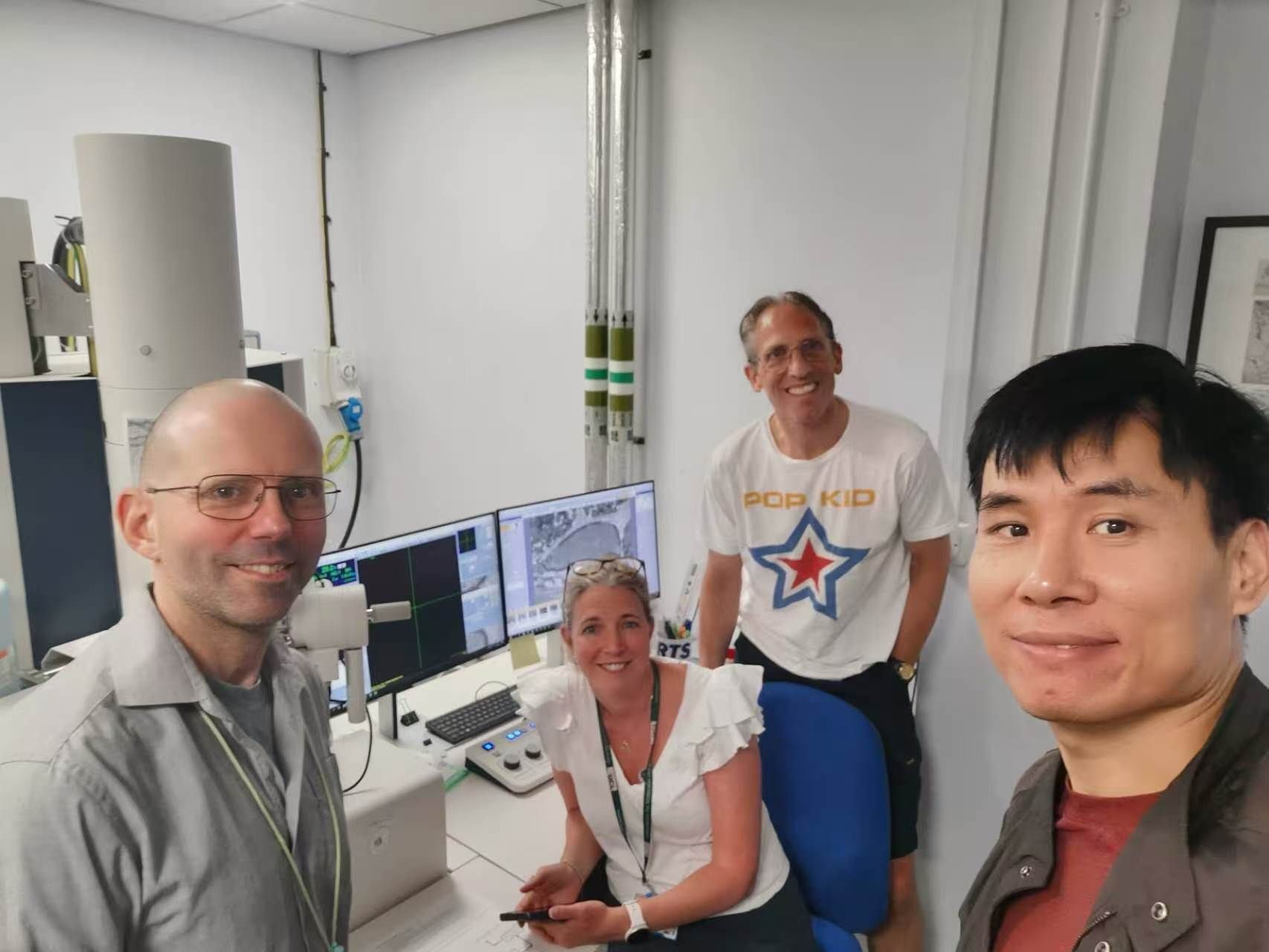
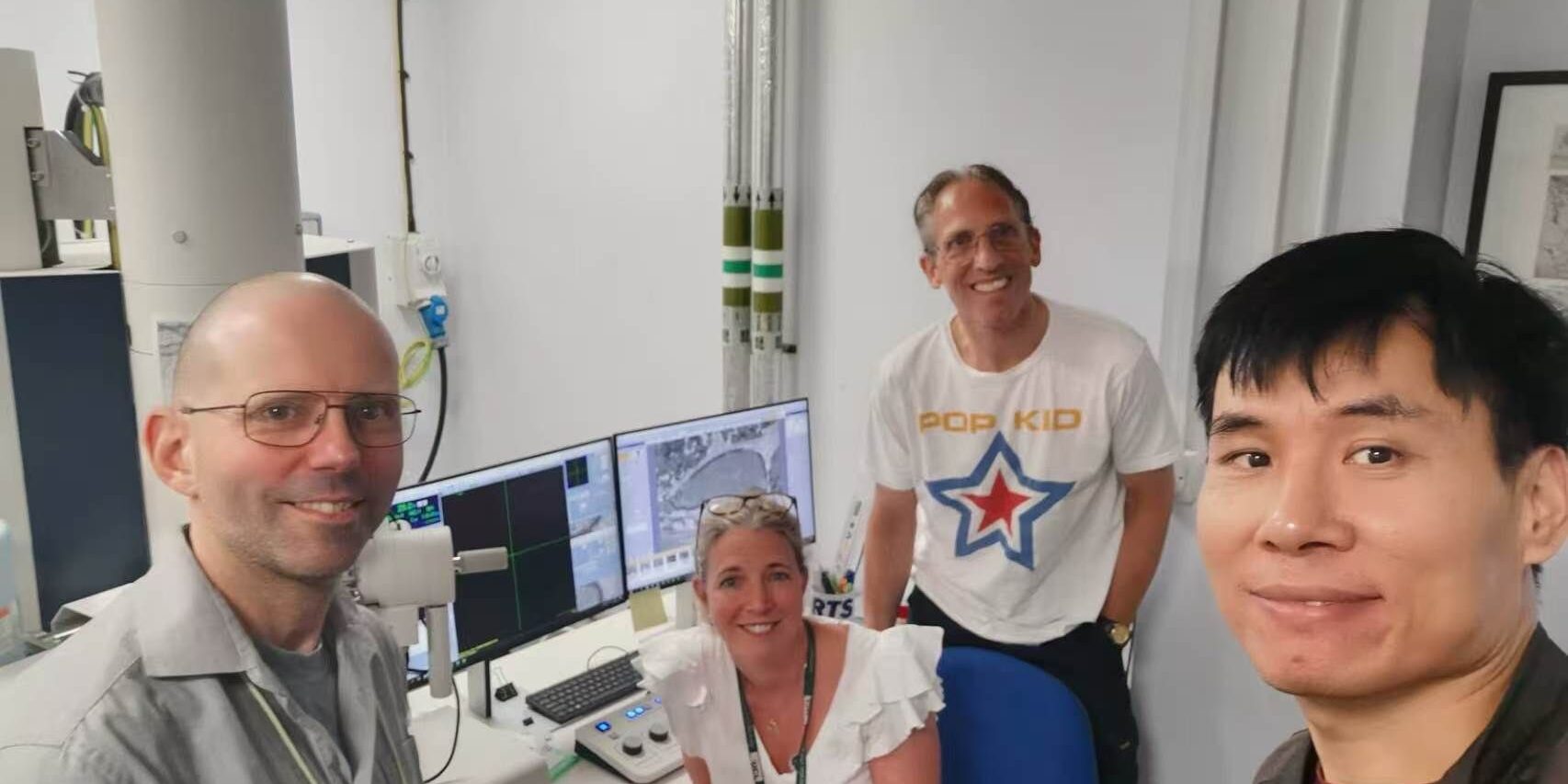
Before the International Microscopy Conference in Liverpool, our product manager Shang Zhenhua had the opportunity to visit Prof Jamima Burden’s team in University College London (UCL), one of EMSIS’s long-standing customers, for a technical discussion with their microscopy team.
The visit had a particularly interesting connection to the history of EMSIS.
Back in 2006, UCL purchased a Morada TEM camera. After almost 20 years of use, the camera was still working well and the team remained very satisfied with its performance.
When UCL decommissioned the TEM last year, rather than simply discarding the camera, they donated the still-functioning Morada to the University of Southampton, where it can continue to support microscopy research.
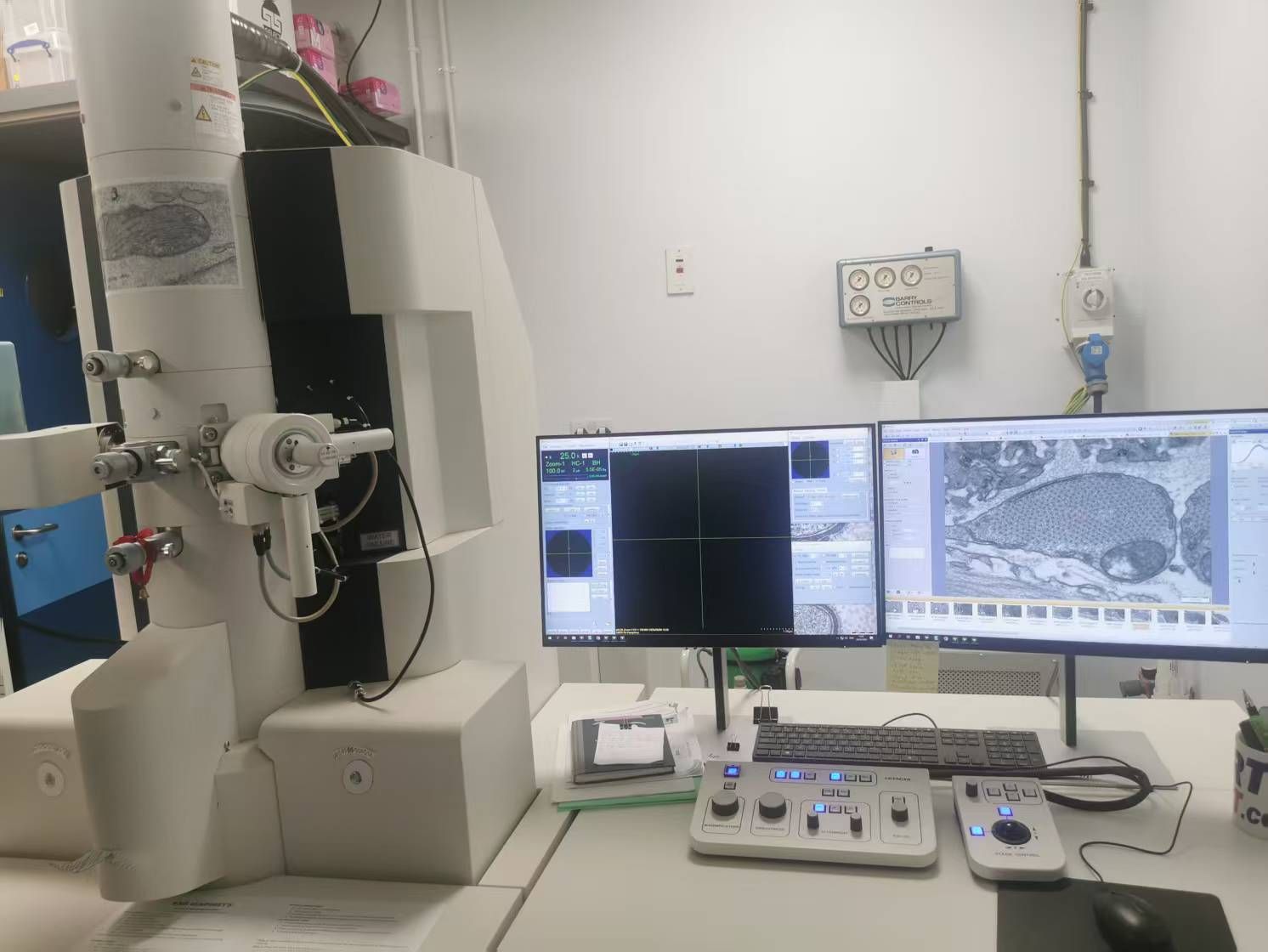
UCL then invested in a new Hitachi HT7800 TEM equipped with an EMSIS QEDIRA camera.
During our technical session, Zhenhua shared some of the ways our customers across Asia are using TEM imaging systems — including different imaging workflows, applications and approaches that he had encountered through his work with microscopy laboratories in the region.
What he found equally interesting was learning how the UCL team works with their imaging system in their own research environment. These exchanges are always valuable because the best application knowledge does not flow in only one direction.
There is also something quite satisfying about seeing the journey from Morada in 2006 to QEDIRA today. Almost two decades of technology development separate the two cameras, from the CCD era to today’s high-resolution CMOS detectors and much faster data acquisition. Yet the underlying goal remains the same: helping microscopists obtain better images and extract more information from their samples.
For us, this is one of the most rewarding aspects of working in electron microscopy — connecting people and applications across different laboratories, countries and generations of technology.
Thank you to the UCL team for the open and very interesting technical discussion. We look forward to continuing the exchange with the microscopy community during the International Microscopy Conference in Liverpool.